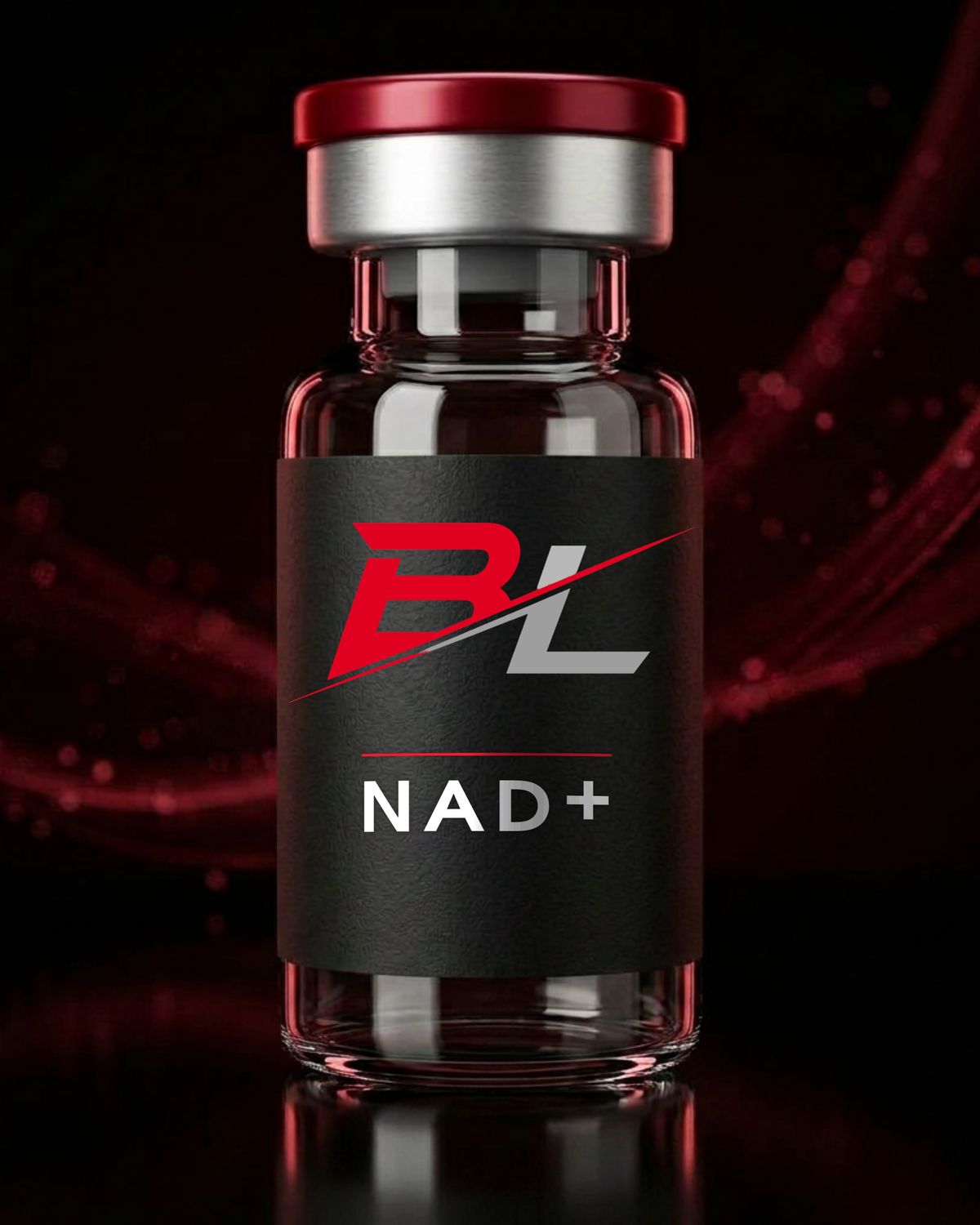
NAD +
$59.99
Size
In stock: 10 available
Product Details
NAD+: Research Use Only
Product Overview
Nicotinamide adenine dinucleotide (NAD+) is a naturally occurring dinucleotide coenzyme supplied for controlled laboratory research. It plays a central role in cellular oxidation-reduction reactions by accepting electrons and converting to its reduced form, NADH.
NAD+ is also used as a substrate by several enzyme families involved in cellular signaling, DNA-associated processes, gene regulation, and metabolic research.
Molecular Profile
- Compound: Nicotinamide adenine dinucleotide
- Abbreviation: NAD+
- Molecular formula: C₂₁H₂₇N₇O₁₄P₂
- Molecular weight: Approximately 663.43 g/mol
- Compound class: Dinucleotide coenzyme
- Reduced form: NADH
- Research focus: Redox chemistry, cellular metabolism, enzymology, and molecular signaling
- Peptide status: Not a peptide
The reported formula and molecular weight refer to the parent oxidized compound. Sodium salts, hydrates, and other supplied forms have different compositions and should be verified against the batch-specific COA.
Scientific Background
NAD+ participates in redox reactions by accepting electrons during metabolic processes and forming NADH. This NAD+/NADH pair is widely studied in connection with glycolysis, the citric-acid cycle, mitochondrial electron transport, and cellular energy production.
NAD+ also serves as a substrate for enzymes including sirtuins, poly(ADP-ribose) polymerases, and other NAD-consuming signaling proteins. These enzyme systems are investigated in research involving gene regulation, protein modification, DNA-damage responses, cellular stress, and metabolic signaling.
Laboratory findings involving NAD+ pathways should not be represented as proof of therapeutic or anti-aging effects in humans.
Research Applications
NAD+ may be studied in controlled laboratory settings involving:
- Oxidation-reduction reactions
- NAD+/NADH ratio analysis
- Cellular-energy and mitochondrial research
- Sirtuin and PARP enzyme assays
- Metabolic-pathway investigations
- DNA-damage-response research
- Compound identity, purity, and stability analysis
Storage and Handling
Store according to the conditions stated on the batch documentation. Protect from heat, moisture, contamination, unnecessary light exposure, and repeated temperature changes. Handling should be limited to qualified laboratory personnel using appropriate research procedures.
Research Use Only
For Research Use Only. Not for human or veterinary use. Not intended for diagnostic, therapeutic, clinical, cosmetic, or household use. Not intended to diagnose, treat, cure, mitigate, or prevent any disease or medical condition. Not a drug, food, cosmetic, or dietary supplement.
Save this product for later
NAD +